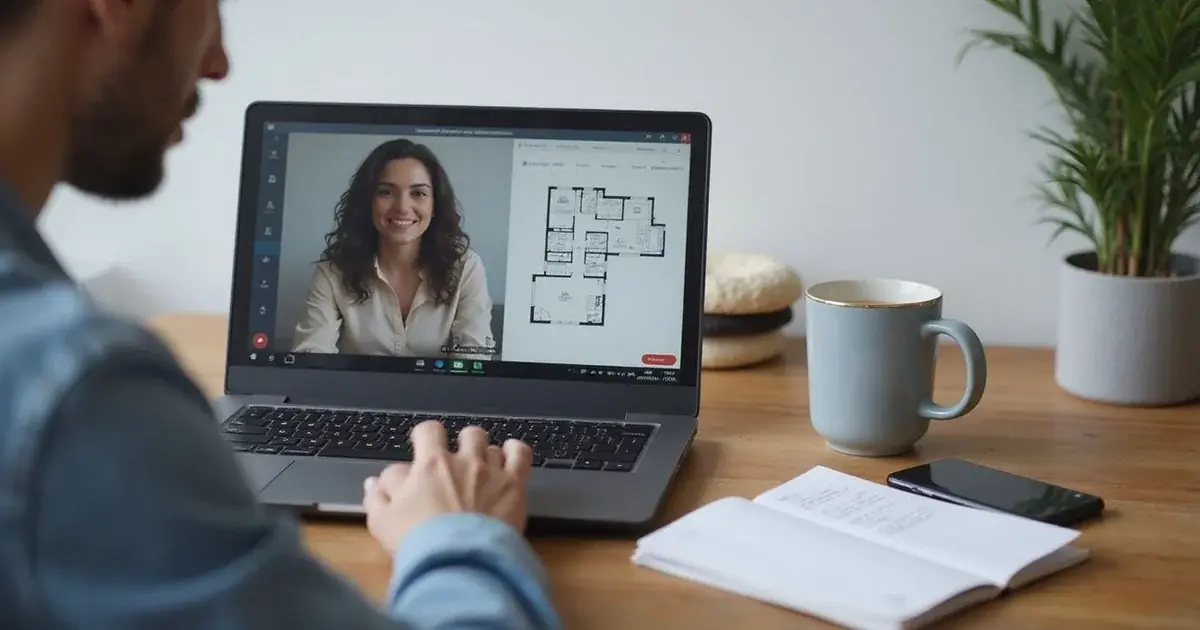
It's routine here, if it's done right
Plenty of Dallas renters sign a lease without standing in the unit. Corporate relocations, moves from out of state, and tight timelines all lead to it. Our relocation to Dallas service sends the list, sets up tours, and helps you apply.
The risk isn't doing it remotely. It's skipping the five steps that make it safe.
The five steps
1. Check that the unit exists and is available. Ask the leasing office if that exact unit is still open before anything else happens. Online listings go stale.
2. Get video of the actual unit. Not the model, and not just a 3D tour. Ask the leasing agent for live video or a recorded walkthrough of the specific unit number you'd be leasing. A Matterport tour is marketing, often shot in a model or a staged unit. It's useful, but it isn't enough.
3. Get the fee schedule in writing. It's a different document from the rent sheet. It tells you the amenity fee, parking, valet trash, package, and whether internet is bundled in and required.
4. Read the concession addendum. Free rent usually comes with a clawback that makes you pay it back if you leave early. That matters more in a relocation, since those plans change.
5. Get the move-in condition in writing. That covers what's being replaced, repainted, repaired, or professionally cleaned before you arrive. “It will be ready” isn't specific enough.
The remote paperwork
Most Dallas properties can handle the whole application and lease remotely.
| Step | How it usually runs |
|---|---|
| Application | Online portal, per adult |
| Screening | 24 to 48 hours, sometimes same day |
| Lease signature | DocuSign or Blue Moon electronic signature |
| Deposit and fees | Online payment through the portal |
| Renters insurance | Certificate of Insurance emailed to the property |
| Utilities | Electric provider set up with the unit’s ESID (meter ID) |
| Keys | Collected on arrival, or arranged with the office |
If your income paperwork is from out of state, flag it early. Some properties take an offer letter, tax returns, or bank statements in place of local pay stubs, and some don't. That's one of the things we sort by.
When our list is wrong
A unit can lease before you ever see it, and a community can change its rules without notice. Tell us when that happens, and we'll start looking for new ones ASAP. No list stays current forever.
What people forget to ask
- Which floor is it on, and which direction does the unit face?
- What is right outside the windows: a courtyard, a garage wall, a freeway?
- Is the unit above or below a mechanical room, trash chute, or amenity floor?
- Where is your assigned parking, and how far is it from the elevator?
- Is there anything currently out of service in the building?
You can get all of those answered over email, and none of them show up in photos.
On a short timeline
Three things start your list: your budget with your gross monthly income, your move date and how firm it is, and where you need to be each day. Everything else can come in as we go.
- Scan your documents now. Photo ID and two or three recent pay stubs as PDFs. Add bank statements if you're self-employed, and your offer letter if you're moving for a new job.
- Know your income multiple. Most Dallas properties want 3x the rent in gross monthly income, some 2.5x and a few 2x. We send the places whose written rules you meet.
- Give us a commute, not one neighborhood. The longest commute you'll take, in minutes, opens up far more places than one area name.
- Ask for homes that are ready now. A unit "on notice" still has someone living in it. On a tight timeline, ask for homes that are empty, cleaned and ready.
- Apply once, not three times. Fees usually run $50 to $75 per adult, and you rarely get them back. Match first, then apply.
Before you pick an area
If you can't read Dallas geography yet, learn that first. Highway corridors and DART access decide your commute more than a neighborhood name does. See reading Dallas geography.
Then send us your budget, move date, and work address. Relocation to Dallas takes it from there, at no cost to you.